
Expanding Scope of a QA Testing:
A QA tester's role goes beyond checking functionality — it involves ensuring overall product quality across multiple dimensions. This includes functional testing to validate features, performance and load testing to assess system behaviour under varying conditions, and stress testing to evaluate stability under extreme loads. Testers also perform security testing to uncover vulnerabilities, bug identification to prevent production issues, and data verification to ensure accuracy across UI, APIs, and databases. Together, these activities help deliver reliable, secure, and high-performing software.
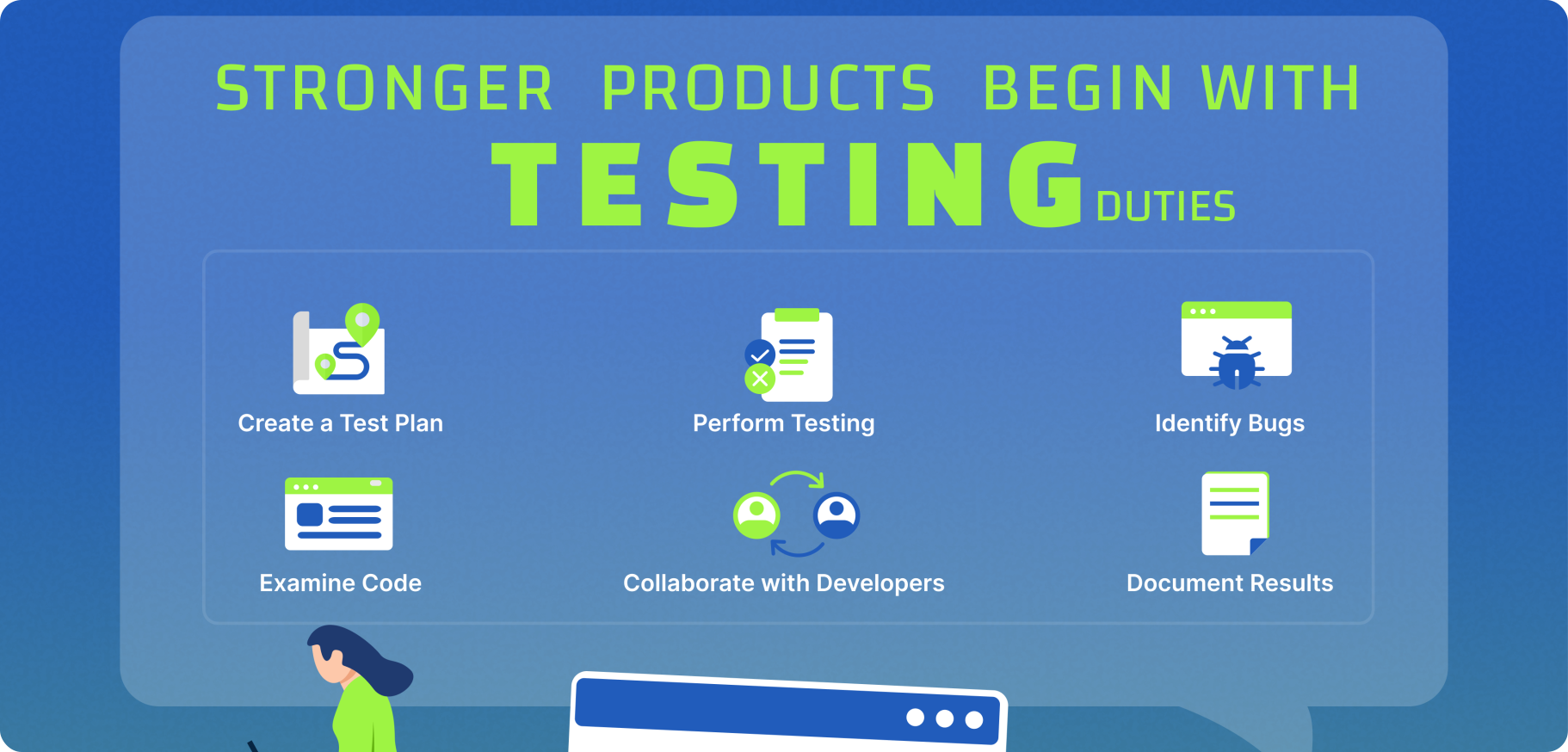
6 Core Duties of a QA Tester
Behind every successful release is a QA tester following structured practices. Here are six foundational duties every tester performs:
1. Create Test Plans
Developing test strategies based on product requirements, defining scope, tools, coverage areas, risk factors, and timelines.
2. Perform Testing
Executing test cases across various testing types (functional, regression, security, performance, etc.) manually or using automation tools.
3. Identify Bugs
Finding and reporting defects, often with screenshots, logs, and steps to reproduce, categorized by severity and priority.
4. Examine Code (where applicable)
In automation or white-box testing, testers review code logic, write scripts, or suggest optimizations.
5. Collaborate with Developers
Working closely with developers, product managers, and designers to ensure shared understanding and fast feedback loops.
6. Document Results
Maintaining logs of test outcomes, test coverage, test environments, known issues, and retesting progress for transparency and traceability
Challenges Faced by QA Testers
QA testing is essential — but not without challenges. Below are the most common hurdles testers face:
Time Constraints
Agile teams often update requirements mid-sprint, requiring test cases and plans to be constantly updated.
Hard-to-Reproduce Bugs
Some bugs occur only under specific, unpredictable conditions, making them difficult to track and fix.
Cross-Platform Compatibility
Testing must ensure consistency across devices, browsers, OS versions, and screen sizes — a growing challenge in today’s diverse tech environment.
Collaboration Gaps
When testers and developers are misaligned, it can lead to miscommunication, duplicated work, or missed bugs
Use of testing in PRAGYA
Testing is essential for PRAGYA App to deliver on its promise of reliability, productivity, and profitability. By ensuring the platform is accurate, secure, highperforming, and scalable, testing not only protects the integrity of the product but also empowers clients to make confident, data-driven decisions.